Visualizzazione post con etichetta Traditional Italian Recipes. Mostra tutti i post

mercoledì 4 gennaio 2017

Polpettone ripieno al forno con patate e pomodorini - Baked stuffed meatloaf with potatoes and cherry tomatoes

Un evergreen intramontabile!!
A timeless classic recipe!!

Polpettone ripieno al forno con patate e pomodorini - Baked stuffed meatloaf with potatoes and cherry tomatoes

Oggi voglio raccontarvi una cosa: soffro di vertigini 😰
È assodato!
Da anni ormai.
Non posso salire su un campanile, su una torre o affacciarmi da un balcone al 12 piano senza che le gambe tremino e il cuore batta a mille! 😨
Con questa premessa, credevo che prendere un aereo fosse pressoché impossibile...
E invece, sapete cosa?
Ogni volta che volo, se posso, sto nel posto vicino al finestrino, ammiro il panorama e faccio foto a go go!! 😝
Ci credereste mai??
Io ancora non sono riuscita a darmi una spiegazione...
Vista l'impossibilità di decifrare questo paradosso, passiamo ad un argomento che non si smentisce mai!! 😁
Oggi andiamo sul classico, un piatto delle feste che mette sempre tutti d'accordo: il polpettone ripieno!!😋


Polpettone ripieno al forno con patate e pomodorini

Ingredienti per 4

500g di carne di manzo macinata
80g di formaggio morbido
prezzemolo
2 foglie di menta
2 spicchi d'aglio
paprika dolce
curcuma
zenzero
600g di patate
1/2 cipolla
4 fette di bacon
formaggio caciotta
300g di spinaci
pomodorini
1 limone
maggiorana
timo fresco
rosmarino fresco
sale
pepe
olio evo

Today I am telling you a secret: I am afraid of heights 😰
It's a given!
For years now!
I cannot go up to a steeple, to a tower or even look out the windows from a 12-floor balcony without having my legs shaking or my pulse racing! 😨
That said, I thought that take a plane was quite impossible for me...
Guess what??
Every time I flight, if I may, I seat next to the windows, enjoy the view and take a lot of pictures!! 😝
Would you believe it??
I still cannot explain it to myself...
Seen I cannot decode this paradox, let's talk about a solid topic!! 😁
Today I will prepare a classic recipe, an holiday dish that everybody loves: stuffed meatloaf!!😋


Baked stuffed meatloaf with potatoes and cherry tomatoes

Ingredients for 4

500g minced beef meat
80g soft cheese
parsley
2 mint's leafs
2 garlic gloves
sweet paprika
turmeric
ginger
600g potatoes
1/2 onion
4 bacon slices
caciotta cheese
300g spinach
cherry tomatoes
1 lemon
marjoram
fresh thyme
fresh rosemary
salt
pepper
extra-virgin olive oil


Laviamo e cuociamo gli spinaci in una padella a fuoco basso, senza aggiungere ulteriore acqua,
Wash and cook the spinach in a pot over low heat, without adding any water,


finché non saranno cotti.
until cooked.


Tritiamo il prezzemolo, la menta e l'aglio e
Chop parsley, mint and garlic and


mettiamoli in una ciotola capiente insieme alla carne e al formaggio morbido.
Condiamo con succo di limone, paprika, curcuma, zenzero, sale e pepe e amalgamiamo il tutto.
put them with the meat and the soft cheese in a big bowl.
Season with lemon juice, paprika, turmeric, ginger, salt and pepper and combine all the ingredients.


Prendiamo un foglio di carta forno e stendiamoci sopra la carne fino a formare un rettangolo.
Take a parchment paper and shape the meat mixture into a rectangle.


Adagiamo il bacon,
Place bacon,


gli spinaci,
spinach,


e la caciotta tagliata a fettine.
and the sliced caciotta cheese.


Aiutandoci con la carta forno, arrotoliamo il tutto e mettiamo a raffreddare in frigo per un'oretta, senza togliere la carta forno.
Using the parchment paper, roll up the meatloaf and let it cool into the fridge for about an hour, without taking off the parchment paper.


Nel frattempo peliamo, tagliamo a cubetti le patate e affettiamo la cipolla.
Condiamo con sale, pepe, maggiorana e un filo d'olio.
Meanwhile peel and dice the potatoes and slice the onion.
Season with salt, pepper, marjoram and olive oil.


Accendiamo il forno a 200°C.
Togliamo il polpettone dal frigo, apriamo la carta forno e mettiamo in una pirofila.
Disponiamo intorno le patate, le cipolle e i pomodorini tagliati a metà.
Condiamo con rosmarino, timo e olio e inforniamo.
Preheat the oven at 200°C.
Remove the meatloaf from the fridge, open the parchment paper and put it in a baking pan.
Place potatoes, onion and cherry tomatoes cut in halves all around the meatloaf.
Season with rosemary, thyme and olive oil and put into the preheated oven.


Cuociamo per circa 40 minuti.
Se le patate non sono ancora pronte, togliamo il polpettone e rimettiamole in forno finché non saranno ben cotte.
Cook for about 40 minutes.
If potatoes are not already done, take off the meatloaf and put them again into the oven until perfectly cooked.


Adagiamo la carne su un piatto da portata, circondata dalla verdura,
Place the meatloaf on a serving plate, surrounded with the vegetables


e portiamo in tavola.
and serve it.


Bon Appétit!!
Share This:        
Read More

domenica 21 agosto 2016

Parmigiana di melanzane - Eggplant Parmigiana

C'è sempre una prima volta!
There is a first time for everything!

Parmigiana di melanzane - Eggplant Parmigiana

Vi svelo un segreto... nonostante io sia una grandissima appassionata di cucina... questa è la mia PRIMA parmigiana di melanzane!
Non l'avevo mai mangiata in precedenza e forse il problema era proprio questo: non sapendo cosa mi stavo perdendo non ci facevo troppo caso... ma ora che l'ho assaggiata non posso far altro se non... recuperare il tempo perduto!! :D
Devo ammettere però che mi sono sempre chiesta da cosa derivasse il nome "parmigiana di melanzane".
Beh, non credo di essere l'unica. Questa sembra essere una domanda tutt'altro che semplice a cui tanti hanno cercato di dare una risposta.
Se ne contendono la paternità la Sicilia, la città di Napoli e quella di Parma.
Il luogo di nascita sembra essere la Sicilia, forse su influenza turca e araba, a cui si deve l'importazione della melanzana stessa in Europa.
Non a caso, tra i piatti tipici di questi popoli troviamo la moussaka, che assomiglia molto alla parmigiana.
Non bisogna poi dimenticare che nella ricetta tradizionale veniva usato il pecorino siciliano e non il parmigiano reggiano.
Dalla Sicilia a Napoli poi il passo è breve.
Il primo trattato culinario in cui viene nominata la parmigiana fu scritto da un autore di origine pugliese che, tra il XVIII e il XIX secolo, prestò servizio nelle casate pù prestigiose di Napoli, tale Vincenzo Corrado.
Nel secolo scorso, la Parmigiana servita a Ischia Ponte nella trattoria delle Sorelle Pirozzi divenne così famosa che si pensò fossero loro le artefici di una tale leccornia.
E Parma?
Parma, più che per il parmigiano, c'entra perché il termine "parmigiana", come mostra il Devoto-Oli, viene usato per descrivere piatti a base di ortaggi, tagliati a fette, disposti a strati e alternati con altri ingredienti, alla maniera degli abitanti di Parma, ossia i parmigiani.
Devo però premettere una cosa, non ho fritto le melanzane nell'olio, ma le ho passate al forno, in modo da rendere la ricetta meno pesante.


Parmigiana di melanzane

Ingredienti:
3 melanzane
400g di mozzarella
Parmigiano reggiano
450g di passata di pomodoro
1 spicchio d'aglio
basilico greco fresco
sale
olio evo

Laviamo le melanzane, togliamo le estremità e tagliamole a fettine sottili.
Disponiamole in una teglia da forno e inforniamo per circa un'ora a 100°-150° C, o finché non si saranno ammorbidite.
I’m going to tell you a secret… even if I am Italian and I love cooking so much, this is my FIRST Parmigiana di melanzane, eggplant parmesan!!
I never ate it before and maybe this is the problem: I was unaware of its taste… now, after tasting it for the first time, I can only try and make up for the lost time!! :D
I have to say that I always used to ask myself what “eggplant parmesan” really meant.
Well, I was not the only one. And the answer is not simple.
Sicily, Naples and Parma are all claiming the dish’s place of origin.
Maybe Sicily gave rise to the Parmigiana, influenced by Turks or Arabs, who imported the eggplant into Europe. As a matter of fact, in their culinary tradition, we can find moussaka, which is similar to Parmigiana.
And we must not forget that the initial Parmigiana recipe required Sicilian pecorino cheese in place of the Parmesan cheese.
After Sicily we take into consideration Naples because Vincenzo Corrado, an Apulian essayist and cook who worked, between the XVIII and XIX century, for some of the most eminent families in Naples, mentioned the Parmigiana dish for the first time in a culinary book.
During the twentieth century, the Parmigiana recipe by Pirozzi Restaurant in Ischia Ponte was so famous that it was said the Parmigiana was invented there.
And what about Parma?
Surprisingly, in this case Parma is not relevant for the cheese, the Parmigiano Reggiano so famous worldwide, but because the Devoto-Oli Italian Dictionary states that the term “parmigiana” defines “a dish with sliced vegetables, layered with other ingredients, following the style of people from Parma, that is “parmigiani” in Italian.
Nowadays, the Parmigiana is made with fried sliced eggplant but, in order to deliver a lighter dish, I baked the eggplant instead.


Eggplant Parmigiana

Ingredients:
3 eggplants
400g mozzarella
Parmesan cheese
450g tomato sauce
1 garlic clove
fresh greek basil
salt
extra-virgin olive oil

Wash the eggplants, cut the extremities and slice them lengthwise.
Place the eggplants in an oven tray and bake them for about 1 hour at 100°-150°C or until the eggplants become soft, but not dry.


Nel frattempo affettiamo l'aglio e rosoliamolo in una padella con un po' d'olio.
Meanwhile, slice the garlic and cook it in a pan with olive oil for a few minutes.


Aggiungiamo la passata e facciamo cuocere per 10-15 minuti.
Add the tomato sauce and cook for 10-15 minutes.


Spegniamo e aggiungiamo del basilico fresco e saliamo.
Turn off the stove, add fresh basil and salt.


Spennelliamo la pirofila dove andremo a disporre la parmigiana con dell'olio e facciamo un primo strato di melanzane, ormai tolte dal forno, senza sovrapporle.
Brush the oven pan where we will cook Parmigiana with olive oil and dispose the first layer of eggplant slices.


Versiamo del pomodoro sopra le melanzane, distribuiamolo bene, aiutandoci con un cucchiaio,
Spread 2 or 3 tablespoons of tomato sauce on the top,


spolveriamo con del parmigiano reggiano,
sprinkle with some parmesan,


e disponiamo la mozzarella una fettina di fianco all'altra.
and place the slices of mozzarella side by side.


Continuiamo facendo altri strati fino a che non avremmo finito tutti gli ingredienti.
L'ultimo strato dovrà avere abbondante passata di pomodoro e parmigiano grattugiato.
Keep disposing layers with the remaining ingredients, ending with a generous quantity of tomato sauce and Parmesan cheese.


Inforniamo a forno caldo a 180°C per 40-45 minuti.
Sforniamo,
Bake uncovered at 180°C for 45-50 minutes.
Remove from oven,


lasciamo intiepidire per 10 minuti e gustiamoci questa deliziosa leccornia.
let sit for 10 minutes before cutting into to serve.


Bon Appétit!!
Share This:        
Read More

giovedì 28 luglio 2016

Impepata di cozze - Peppered mussels

A noi ce piace i moscioli!!
We like moscioli!!

Impepata di cozze - Peppered mussels

Non saranno come i celebri mitili di Portonovo, perché sono unici e irripetibili, ma le cozze che abbiamo mangiato ieri sera erano fenomenali.
Dolci, come mai altra cozza mangiata in precedenza e veramente deliziose...
Mannaggia, non mi sono fidata del tutto e ne ho preso solo un kg... a saperlo, mi sarei accaparrata il sacco intero!! :D


Impepata di cozze

Ingredienti per 2:
1kg di cozze
1 spicchio d'aglio
olio evo
pepe
prezzemolo fresco
pane per crostini

They are certainly not as famous as the mussels from Portonovo (better known as "moscioli") because they are unique and we can find them only in the Marche region, but yesterday we ate some absolutely delicious mussels.
They were so sweet we had never tasted anything like that before...
Honestly, I was not so confident at the beginning so I bought only 1 kg... if only I had known, I would have bought the entire bag!! :D


Peppered mussels

Ingredients for 2:
1kg mussels
1 garlic clove
extra-virgin oliv oil
peper
fresh parsley
bread


Prendiamo le cozze, eliminiamo quelle aperte o rotte (che sono già morte, hanno perso la loro acqua) e laviamole sotto acqua corrente.
Eliminiamo prima il bisso, cioè il ciuffetto che fuoriesce dal guscio: basterà prenderlo con le dita e tirare.
Raschiamo il guscio con un coltello a lama liscia, togliendo tutte le incrostazioni.
Passiamo di nuovo sotto l'acqua e mettiamole da parte, anche in frigorifero, finché non siamo pronti per la cottura.
Affettiamo l'aglio e facciamolo soffriggere in una padella capiente con dell'olio.
Check if there are some open or broken mussels and discard them, because they are already dead and have lost their water.
Wash the mussels under running cold water, then get rid of the byssus, that is the "beard" that comes out of the shell of the wild mussels: grasp it and give it a sharp yank. Scrub the mussel's shells very well with a smooth blade knife. Wash them again under cold water and set them aside, into the fridge if possible, before cooking. Slice the garlic and make it brown in a large pan with olive oil for a couple of minutes.


Uniamo le cozze e copriamo con un coperchio facendo cuocere a fuoco alto per qualche minuto finché non si saranno aperti tutti i mitili.
Add the mussels, close the lid and cook over a high heat for a few minutes until the mussels have opened.


Nel frattempo prendiamo il prezzemolo fresco, laviamolo, togliamo i gambi e tritiamolo grossolanamente.
Meanwhile take the fresh parsley, wash it and chop it.


Affettiamo il pane e passiamolo qualche minuto sotto il grill o lasciamolo bruschettare su una piastra finché le fette non diventeranno belle croccanti.
Slice the bread and toast it for a few minute until golden brown and crisp.


Quando le cozze saranno tutte aperte, togliamole dal fuoco, spolveriamo con abbondante pepe e con il prezzemolo.
When the mussels are open, take the pan off the heat, sprinkle the chopped parsley and grind a lot of pepper on top.


Disponiamo su un piatto con il pane abbrustolito e portiamo in tavola.
Serve in a dish with toasted bread.

Impepata di cozze

Bon Appétit!!

Ps: se dovesse avanzare il sughetto delle cozze, non buttatelo assolutamente, perché può essere usato a mo' di brodo per preparare dei risotti o della pasta.
Ps: if there is still some mussel's broth left over at the end, don't throw it away, as you can use it to prepare risotto or pasta.
Share This:        
Read More

domenica 27 marzo 2016

Pizza di formaggio marchigiana - Cheese bread from Marche

Buona Pasqua!!
Happy Easter!!

Pizza di formaggio marchigiana - Cheese bread from Marche

E come ogni Pasqua che si rispetti... ecco la pizza di formaggio!!
Sono riuscita a prepararla giusto in tempo per poterla portare in tavola oggi, accompagnata dall'immancabile frittata con la coratella d'agnello!!
Non avendo a disposizione il pecorino fresco, ho dovuto "accontentarmi" del Gouda e, siccome a me non piace affatto 😋, ne ho messo in abbondanza.
D'altronde, una pizza di formaggio che si rispetti deve essere stracolma di pezzetttoni di formaggio, altrimenti che pizza di formaggio marchigiana sarebbe? 😁


Pizza di formaggio marchigiana

Ingredienti per 1 pizza

350g di farina integrale
150g di latte
3 uova
3 cucchiai di olio evo
50g di parmigiano grattugiato
50g di pecorino grattugiato
180g di pecorino fresco (io ho dovuto usare il Gouda)
25g di lievito fresco
2 cucchiaini di sale
1 cucchiaino di zucchero
tanto pepe nero

In my region, it's not Easter... without a cheese bread!!
I could prepare it just in time to serve it today with the inevitable omelette with lamb offal!!
I couldn't use fresh pecorino, because it was impossible to find it, so I had to make do with the Gouda cheese and, since I like it 😋, it wasn't a problem, not at all, and the bread was full of cheese, as it should be!
After all, the real cheese bread from Marche has to incorporate a lot of diced cheese, otherwise it won't be a real one!! 😁


Cheese bread from Marche

Ingredients for 1 cheese bread

350g whole-wheat flour
150g milk
3 eggs
3 tablespoon of extra-virgin olive oil
50g grated parmigiano cheese
50g grated pecorino (or other mature sheep's milk cheese)
180g fresh pecorino (I had to use Gouda cheese, instead)
25g fresh yeast
2 teaspoon of salt
1 teaspoon of sugar
black pepper (a lot)


Mettiamo la farina in una ciotola, facciamo un buco in mezzo dove metteremo il lievito spezzettato, lo zucchero e il latte.
Put the flour in a big bowl, make a hole in the center and put in it the fresh yeast, the sugar and the milk.


Mescoliamo finché il lievito non si sia sciolto, dopodiché aggiungiamo le uova, il sale e tanto pepe.
Mix until all the yeast is melted, then add eggs, salt and a lot of pepper.


Facciamo amalgamare gli ingredienti, poi versiamo i formaggi grattugiati
Combine all the ingredients, then add the grated cheeses


e i tre cucchiai di olio.
and three tablespoon of olive oil.


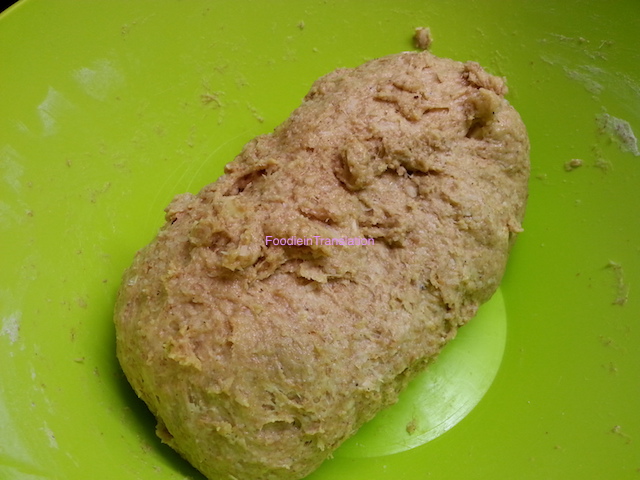
Continuiamo a mescolare prima con un cucchiaio poi con le mani, fino ad ottenere un panetto omogeneo, abbastanza liscio e appiccicoso.
Let's continue to mix, firstly with a tablespoon, then by hands, until the dough is uniform, quite smooth and sticky.


Aggiungiamo il Gouda che avremo tagliato a cubetti più o meno grandi
Add the diced Gouda


e maneggiamo ancora l'impasto in modo da incorporare tutto il formaggio.
and knead again the dough until all the cheese is well combined.


Lasciamo riposare giusto il tempo di imburrare abbondantemente la teglia a bordi alti, dove cuoceremo la pizza (l'ideale sarebbe una in coccio, ma qualsiasi altro tipo di stampo va bene, anche quelli per il panettone, a patto che abbia i bordi alti).
Let it rest until you grease a round cake pan with high sides (the ideal pan should be a clay pot, but you can use any pan with high sides you have).


Versiamo l'impasto qui dentro,
Put the dough inside,


e lasciamolo lievitare per un paio d'ore o finché non abbia raggiunto e superato i bordi.
Io l'ho messo a lievitare nel forno spento e dopo due ore e mezzo si presentava così 😊
and let it rise for a couple of hours or until it reaches and rises above the sides.
I put it into the turned-off oven and after two hours and a half it was like this: 😊


Ho tirato fuori la pizza, ho acceso il forno a 180°C e l'ho infornata non appena il forno ha raggiunto la temperatura desiderata.
Cuociamo per circa mezz'ora, poi facciamo la prova dello stecchino e se la pizza è cotta, togliamola dal forno
Remove from the turned-off oven, preheat it at 180°C and then put again the cheese bread into it.
Bake for about half an hour, then test the cheese bread with a toothpick and if it is done, just remove from the oven


e lasciamola raffreddare completamente prima di sformarla.
Posizioniamola sopra un tagliere
and let it cool completely before turning it out.
Place it on a wooden cutting board


e tagliamola a fette!!
Questa pizza di formaggio può essere mangiata come sostituto del pane, ma sprigiona il meglio di sì nelle scampagnate, accompagnata da affettati... magari da salumi tipici marchigiani come il ciauscolo e simili!! 😋
and slice it!!
You can eat just this cheese bread, but is best way is during pic-nic, combined with cold meat, like ham, sausages, salami, pork loin and... of course, if you have cold meat from Marche, like for exemple ciauscolo, a soft salami, it will be divine!! 😋

Pizza di formaggio marchigiana - Cheese bread from Marche

Bon Appétit!!
Share This:        
Read More

domenica 7 febbraio 2016

Castagnole marchigiane - Castagnole from Marche

E Carnevale sia... finalmente!!
Mardi Gras is coming... finally!!

Castagnole marchigiane - Castagnole from Marche

E siccome Martedì Grasso si avvicina a grandi passi... urge una bella iniezione di castagnole!!
In Italia le castagnole rappresentano un dolce tipico di Carnevale, ovviamente fritto, tondo e magari anche ripieno di crema o cioccolato... a casa mia no!
A casa mia, nell'entroterra marchigiano, le castagnole somigliano più a delle ciambelle.
Mia nonna le ha sempre preparate così e, come ormai sapete, io sono fedele alla tradizione! :D
Mettiamoci all'opera!!


Castagnole marchigiane

Ingredienti

3 uova
400g di farina + farina per spolverare il piano di lavoro
buccia di limone
120g di zucchero
1 bustina di lievito per dolci
45g di acqua
70g di latte
olio di girasole
zucchero per la finitura

Mardi Gras is coming soon... and I need to prepare a lot of castagnole!!
In Italy castagnole are a kind of fried carnival sweets, round and perhaps filled with custard or chocolate cream... but not at my parent's house!
There, among Marche's hills, castagnole look a bit like donuts.
My grandmother has always prepared them like that and, you know, I want to keep traditions alive! :D
So, let's make castagnole my granma's way!!


Castagnole from Marche

Ingredients

3 eggs
400g all-purpose flour + flour for the worktop
lemon zest
120g sugar
1 packet baking powder
45g water
70g milk
sunflower oil
sugar for the final sprinkling


Rompiamo 3 uova in una ciotola e aggiungiamo lo zucchero.
Break 3 eggs in a bowl and add the sugar


Prendiamo una forchetta e sbattiamo il composto finché non diventa bello spumoso (questa parte ovviamente può essere fatta con uno sbattitore elettrico, ma io ho usato lo stesso attrezzo che usava mia nonna, ritornando così ai tempi dell'infanzia).
Aggiungiamo l'acqua, il latte e la buccia di limone grattugiata (piccola nota dolente: nonna usava aggiungere del mistrà, ma essendone ahimè sprovvista, ho aumentato, di poco, la dose del latte).
Beat the mixture with a fork until it is spumy (you can use an electric beater, but I wanted to use the same tools my granny used, going back to my childhood).
Add water, milk and grated lemon zest (at this point I have a sore point: my grandmother added some mistrà, a local anisette, but I do not have it, so I add a little bit more milk).


Continuiamo a mescolare, poi versiamo il lievito per dolci
Stir, then add the baking powder


e incorporiamo la farina poca alla volta.
and the flour little by little.


Mescoliamo con la forchetta fino a quando non diventa praticamente impossibile
Mix with a fork until you can


e spostiamo l'impasto su una tavola di legno infarinata.
then put the dough on a floured wooden board.


Maneggiamo l'impasto facendo attenzione perché l'interno rimane umido e continuerà ad attaccarsi sul piano di lavoro, ma non c'è da preoccuparsi, basterà spolverare la tavola di quando in quando con la farina e recuperare la pasta attaccata usando una spatola.
Quando avremo un panetto liscio,
Knead the dough and pay attention because it will be sticky, but it's ok, you have only to dust the wooden board with some flour from time to time and use a dough spatula.
Once you have a smooth dough,


possiamo prendere dei pezzettini di pasta, formare dei bastoncini e creare tante piccole ciambelle.
you can take a bit of it, make sticks and then create a lot of small donuts.


Copriamo le ciambelline con uno strofinaccio e mettiamo a scaldare una padella con abbondante olio di semi di girasole.
Quando l'olio sarà ben caldo (cioè quando, immergendo uno stecchino, si formeranno delle bollicine intorno ad esso) immergiamo le castagnole.
Cover the donuts with a cloth and heat abundant sunflower oil in a frying pan.
Once the oil is hot (if you dip a toothpick into the oil and it starts bubbling it's ready for frying) you can carefully add castagnole.


Mettiamo poche castagnole alla volta, così che abbiano spazio sufficiente per muoversi e gonfiarsi.
Imprimiamo alla padella un movimento rotatorio in modo da favorire la lievitazione e la cottura uniforme delle castagnole.
Mi raccomando non facciamo movimenti troppo bruschi altrimenti l'olio fuoriesce e, oltre a sporcare la cucina oltre ogni immaginazione, rischiamo di farci male.
Una volta che le castagnole avranno assunto un bel colorito dorato,
Dip into the oil only a few castagnole at a time, so they can move and rise.
Rotate the pan to help the rising process and so that all side of the castagnole gets cooked evenly.
BUT, pay attention, do not rotate the pan too quickly otherwise the oil could come out and you could get hurt and have a kitchen awfully dirty.
Once the castagnole are golden brown on both side,


togliamole dal fuoco, scoliamole sulla carta cucina, trasferiamole in un piatto pieno di zucchero e rigiriamole in modo che ne escano completamente ricoperte.
remove them from the pan, let them drain on several layers of absorbent paper towels, then toss them into a plate full of sugar.


Continuiamo a cuocere fino ad esaurimento (delle castagnole, non il nostro) e portiamo in tavola per festeggiare questa ultima domenica di Carnevale!!
Fry all the castagnole, serve them and enjoy the Mardi Gras!!

Castagnole marchigiane - Castagnole from Marches

Bon Appétit!!
Share This:        
Read More